
TERMINAL EDIT — ESSAY NO. 003
The flight is gone.
It happens. A connection missed, the board updating without you, the gate already closed by the time you get there. The itinerary dissolves. The evening opens up in a way evenings rarely do — unscheduled, unplanned, belonging to nobody’s agenda including yours.
Detroit has a way of doing this. Keeping you.
In 1931, Henry Ford built a hotel across from his airport in Dearborn, Michigan. The Dearborn Inn — the first airport hotel in America, designed for luxury and corporate travelers at a moment when flying was still a serious undertaking reserved for serious people. Ford understood something the rest of the country would take decades to figure out: that movement needed infrastructure. That the people in the air deserved somewhere worthy of the trip when they came back down.
Detroit has been thinking about this longer than any other American city.
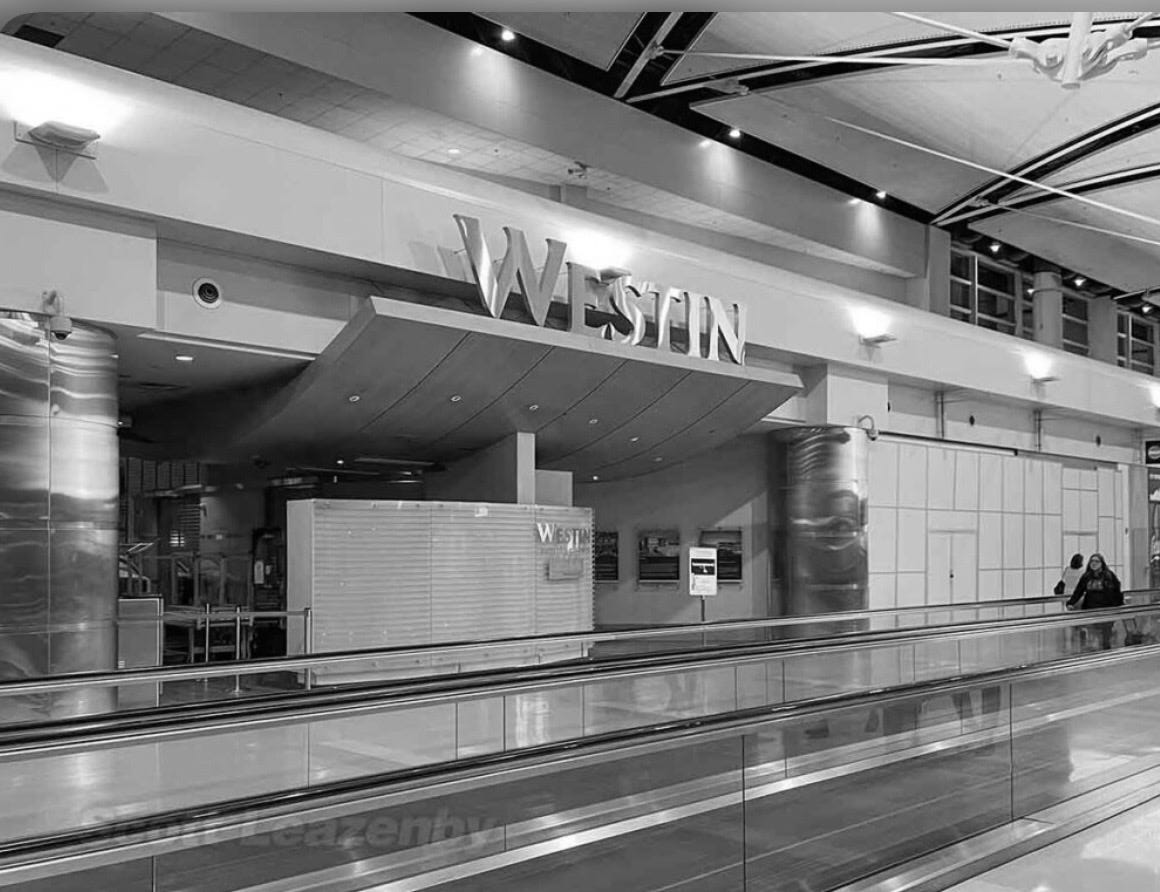
The Westin at McNamara is the continuation of that thought. $85.1 million. 400 rooms. Opened January 2003, directly connected to the Edward H. McNamara terminal — Delta’s hub, one of the most capable and quietly respected airports in the country. Not adjacent to the terminal. Not a shuttle ride away. Inside it. The moving walkways are your lobby. The gates are your neighborhood. The aircraft pushing back from the concourse are your ambient sound.
There are only a handful of hotels in America built directly inside an airport terminal. This is the one worth knowing.
The atrium is eight stories of bamboo — fifty-foot trees rising toward a skylight that breaks the light into leaf patterns across the lobby floor. Granite and African anigre wood. A Zen garden. A 5,000 square foot reflecting pool. Glass elevators moving up the interior face of the building. A jet lounge on the upper level overlooking the apron and runway — aircraft visible through the glass, the whole machinery of departure laid out below you like a diagram of somewhere else.
The building is soundproofed concrete with double-pane windows and a filtration system that keeps jet fuel out of the air. You would not know, inside this atrium, that you are inside an airport. You would know you are somewhere specific. Somewhere that was thought about.
The rooms are mid. That’s the honest assessment. Functional, clean, Westin standard — the Heavenly Bed, the custom showerhead, the city visible through windows that hold the sound out. Nobody books this hotel for the rooms. They book it because the alternative is sleeping somewhere else in a city you’re only passing through, and this hotel removes that calculation entirely.
A friend picked up the phone.
That’s how the night became something other than a missed connection. Dinner in Detroit — the city that had already been written about in these pages, the city that doesn’t ask for your approval. The evening that wasn’t planned became the evening that was.
Detroit shows up when the itinerary falls apart. That’s a specific quality not every city has.
Then back to the Westin. Back through the terminal that at this hour has become something quieter and more essential than it is during the day. The families gone. The leisure travelers gone. The airport stripped down to its working self — gate agents, cleaning crews, the occasional delayed passenger moving through corridors that echo differently at midnight.
The room. The runway visible through the glass. An aircraft pushing back in the dark, its lights moving slowly across the apron, the sound of it arriving a half-second after the image. The city outside doing whatever Detroit does at this hour.
The filtration system keeps the jet fuel out. The soundproofing keeps the engines at a distance. But you feel the airport around you the way you feel weather — not as noise but as pressure. The specific presence of a place that processes departures all day and doesn’t stop when you go to sleep.
The dedicated TSA lane is exclusive to hotel guests. You wake up. You pack. You walk to security. You are at your gate before most passengers have found parking.
The convenience of getting out of bed and walking to your flight is a feeling that has no equivalent in commercial air travel. Not the lounge. Not the upgrade. Not the car service to the terminal. The hotel room that is the terminal — the bed that is sixty seconds from the gate — that is a different category of ease entirely.
Delta operates its hub here. If McNamara is your airport, this hotel removes every friction the morning creates. The alarm. The car. The check-in. The security line. All of it collapsed into a walk down a corridor you could do in your sleep because you essentially just did.
Detroit built the first airport hotel in America because Henry Ford understood that the people moving through his airport deserved more than a waiting room.
Ninety years later the Westin at McNamara is the fullest expression of that idea. Not a hotel near an airport. A hotel that is the airport. The moving walkways running beneath your room. The gates visible from the jet lounge. The aircraft that becomes your alarm clock.
The missed connection that kept you here was not an accident.
Detroit has a way of doing this. Keeping you until you understand why you stayed.
Next: Washington DC — the city that makes you become someone who deserves it.
Subscribe to TERMINAL EDIT. New essays every week.
Late flights. Strange cities. Rooms that don’t remember you. We write about that life. Honestly.